
You just put up a new cedar fence in Martensville, and it looks exactly the way you hoped, warm, natural, and solid. The problem is that an unprotected cedar fence on the Saskatchewan prairies can start turning grey and drying out within one or two seasons. Finding the best stain for cedar fence protection in this climate is not as simple as pulling something off the shelf, since the wrong product will peel, fade early, or fail to penetrate the wood, and then you are back to square one.
Key Takeaways
- Cedar contains natural oils that can prevent some water-based stains from absorbing evenly, so product choice matters.
- Oil-based and hybrid penetrating stains hold up better through prairie temperature swings and UV.
- Martensville’s freeze-thaw cycles and intense summer UV are the two biggest threats to cedar fence stain.
- Semi-transparent stains show off cedar’s natural grain, while solid stains cover older, weathered wood.
- Wait 4 to 8 weeks before staining a brand-new cedar fence.
- A quality stain on a well-prepped fence can extend its life by 5 to 10 years or more.
Why the Right Stain Matters More on the Prairies
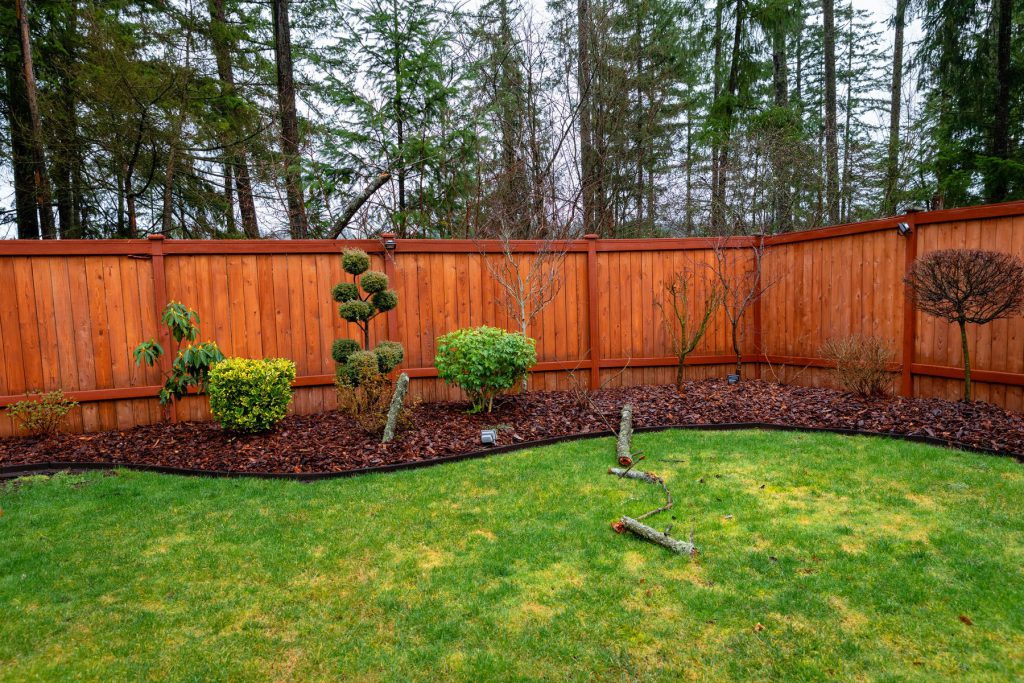
A cedar fence is a fantastic addition to any yard, bringing a mix of durability and natural beauty, with rich color and rustic charm that instantly improves an outdoor space. But cedar’s natural character only protects it so far against what Saskatchewan throws at it every year.
The Saskatoon area, which includes Martensville, has short, hot summers and extremely cold winters in a fairly dry prairie environment. Those conditions create two serious problems for an unprotected cedar fence. First, cold winters with heavy snow and ice drive freeze-thaw cycles that make the wood expand and contract, which can lead to splitting, and second, UV rays gradually break down wood fibers and fade color, with south- and west-facing sections taking more sun damage than shaded ones.
On average, a well-maintained cedar fence will last 15 to 30 years.
Staining or sealing can extend that life by 5 to 10 years or more by protecting the wood from UV, moisture, and rot while keeping its natural look. The difference between a fence that reaches 25 years and one that needs replacing at year 12 usually comes down to how consistently and how correctly it was protected.
What Every Good Cedar Fence Stain Needs
Before looking at specific stain types, here is what separates a product worth buying from one that will let you down.
- Deep penetration: oil-based stains excel in harsh climates where extreme temperature swings and intense UV challenge wood protection, and because the stain becomes part of the wood rather than a surface film, it resists peeling and flaking.
- Strong UV inhibitors: a good stain blocks the UV rays that break down wood fibers and fade color, keeping cedar looking vibrant for years.
- Moisture resistance: by sealing the wood, the stain keeps moisture from penetrating and causing rot and decay, which extends the fence’s life and cuts long-term repair costs.
- Flexibility: as cedar expands and contracts through Martensville’s temperature swings, a rigid surface coating cracks, while a penetrating stain moves with the wood because it bonds inside the fiber.
The 4 Best Stain Types for a Cedar Fence in Martensville
Here are the four stain types that make the strongest case for the best stain for cedar fence in a climate like ours.
1. Oil-Based Semi-Transparent Stain: The Prairie Standard
This is the category that holds up most consistently on cedar in climates like ours. Cedar’s oils can keep water-based stains from absorbing evenly, which is why oil-based stain is often the best for cedar fences in the prairies.
Oil-based stains have long dominated the cedar market for their penetration and durability. They use mineral spirits or other petroleum-based solvents as carriers, letting the pigments and protective compounds soak deep into the wood fibers, which typically means reapplication every 3 to 5 years under normal conditions.
For Martensville homeowners, that deeper penetration is especially valuable. By embedding into the fibers, oil-based stains create a barrier that keeps water from seeping in, reducing the risk of warping, cracking, and rot.
The trade-offs: cleanup requires mineral spirits, dry time can run 24 to 48 hours, and these products carry higher VOC content than water-based options. The Government of Canada’s overview of volatile organic compounds explains what VOCs are and the precautions worth taking. Apply in the morning or late afternoon, when the boards are out of direct sun, so the stain can penetrate before the surface dries.
2. Hybrid Water-Borne Modified Alkyd: The Canadian Option
This category has grown substantially, and for good reason. A formulation like Sansin’s uses water as a carrier to drive natural oils and UV inhibitors deep into the wood fiber, where they bond at the cellular level, and once the water evaporates, the protective oils stay embedded. That gives you the easy cleanup and low odor of a water-based product with the deep penetration and longevity of an oil-based one.
These hybrids carry significantly lower VOC levels than traditional oil-based alternatives, often well below regulatory limits. For someone staining a fence on a warm summer day, that means less odor, less exposure to fumes, and a safer space for children and pets.
Sansin-type products typically last 2 to 4 years on horizontal surfaces like decks and 4 to 6 years on vertical surfaces like fences and siding, which makes them one of the lower-maintenance options. Because Sansin is a Canadian company engineering products for northern climates, they tend to be widely available regionally and built for the weather Martensville actually sees.
3. Semi-Transparent Water-Based Stain: When Color Retention Is the Priority
Water-based semi-transparent stains have improved substantially, holding color well and resisting sun-driven fading for a long-lasting finish. They also dry faster than oil-based products, sometimes in 1 to 3 hours, and clean up with soap and water.
The caution with cedar is absorption. Cedar’s oils can keep water-based stains from soaking in evenly, so if you go water-based, choose a product labeled for cedar or resinous softwoods and lightly sand the surface first to open the grain.
Water-based stains coat previously treated fences more effectively, since they can go over earlier water- or oil-based applications without smears or patches, which makes them ideal for touch-ups. If you are recoating a fence already finished with a water-based product, this is often the easiest and most compatible choice.
4. Solid Stain: For Older or Already-Weathered Fences
Cedar has real natural beauty and is naturally rot-resistant, but it needs staining every year or two to keep looking good, and without it the wood weathers to grey quickly. Once a fence reaches that stage, a semi-transparent stain will not cover the damage, since it is designed to show the wood, not hide it.
That is where solid stains come in, providing full, opaque coverage that conceals weathering, discoloration, and minor surface imperfections. The trade-off is that solid stains eventually peel rather than wear away gradually, and when they fail, recoating takes more prep to ready the surface. For a fence in rough shape, solid stain is often the practical call, as long as the wood is cleaned thoroughly first.
How the Prairie Climate Changes the Equation
Most stain comparisons are written for climates far milder than what Martensville sees. Determining the best stain for cedar fence depends on climate, the look you want, your maintenance appetite, and budget, and the right stain for the humid Southeast differs from what works in the arid Southwest or the temperature extremes of the Northern plains.
Saskatchewan sits squarely in that Northern Plains category. Film-forming coatings that perform well in Vancouver or Toronto often crack, peel, or fail early here because they cannot handle the rapid swing from summer heat to winter cold. A penetrating stain handles those extremes more reliably because there is no surface film to crack, since the protection lives inside the wood.
If you have a deck to deal with alongside your fence, the same principles apply. Our post on how to stain a deck covers similar prep and product considerations for horizontal wood surfaces in this climate.
When to Stain: Getting the Timing Right in Martensville
Timing affects how well a stain performs, since even a quality product will not cure properly in the wrong conditions.
- Temperature window: the best range for staining cedar is 10°C to 32°C, and early morning or late afternoon is ideal so the sun is not pulling moisture out before the stain absorbs.
- Weather: plan for at least 24 to 48 hours without rain after application.
- Seasonal window: In Martensville, late May through early September is the reliable window, when temperatures stay consistently above 10°C, and most penetrating stains cure as intended.
- New fence: wait 4 to 8 weeks after installation before staining, so the wood can dry, lose moisture, and settle as it expands and contracts into its environment.
Surface Prep: The Step That Determines How Long Your Stain Lasts
Even the right stain will underperform on a surface that is not ready. Before staining, work through these steps.
- Clean the fence: remove dirt, pollen, and surface degradation, using a wood cleaner or brightener, which also lifts grey weathering.
- Let it dry: at least 24 hours, ideally 48, before staining.
- Check moisture content: it must be below 20% on the day of application for lasting performance.
- Sand rough areas: light sanding helps where old stain has worn completely away or where wood fibres have raised from weathering.
- Work in sections: apply top to bottom, keep a wet edge to prevent lap marks, and avoid staining in direct sunlight.
For a deeper look at how product quality changes long-term outcomes, our post on high-performance coatings is worth reading before you choose a product.
How Often Does a Cedar Fence Need Restaining on the Prairies?
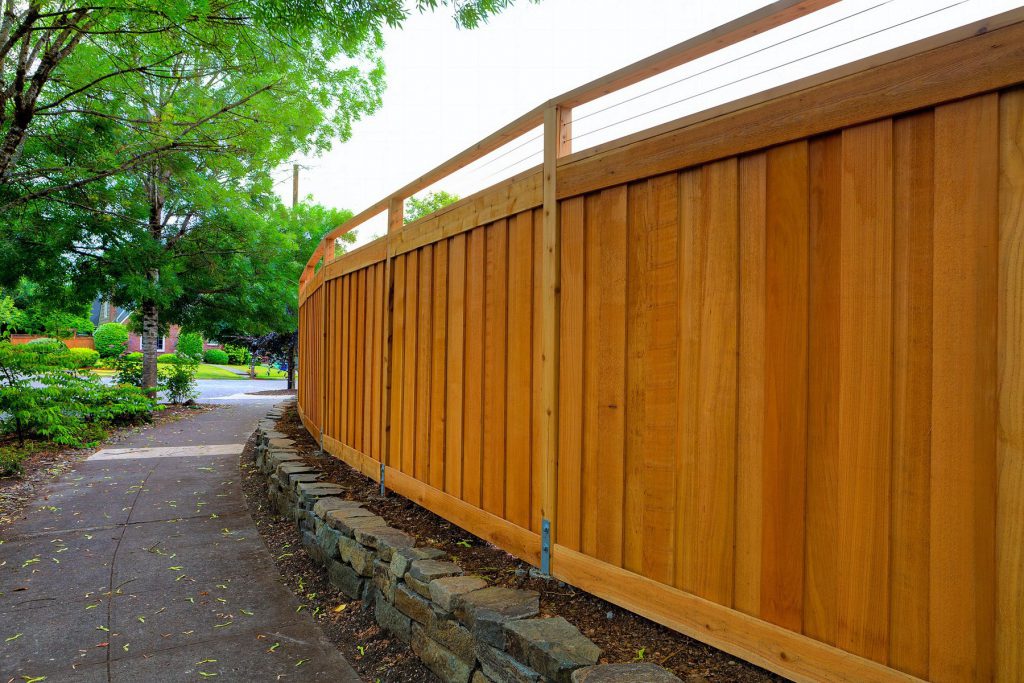
How often you restain depends on the climate, how much sun and rain the fence gets, and the stain you used originally. Generally, plan to refresh every 2 to 5 years, and on the prairies, south-facing sections in full sun may need attention at the shorter end of that range.
If the color fades, the wood soaks up water more readily, or you notice cracks or splits, it is probably time for a new coat. A simple water test works well: after a rain, watch whether water beads on the surface or soaks in, since beading means the stain is still protecting and quick absorption means it is time to clean and recoat.
Catching it early, before the wood dries out and starts cracking, always costs less than waiting for visible damage. If you are weighing whether your fence or other exterior surfaces need a full reapplication or just spot maintenance, our post on repainting versus touching up your exterior walks through how to make that call.
Quick Reference: Which Stain Type Is Right for You?
- New cedar fence, natural grain to show: oil-based semi-transparent.
- Oil-like durability with low VOC and easy cleanup: hybrid water-borne modified alkyd (Sansin-type).
- Recoating over an existing water-based stain: water-based semi-transparent.
- Older fence with grey weathering or visible damage: solid stain after thorough prep.
Ready to skip the prep work and get it done right the first time? Revive Painting and Wall Coverings handles exterior painting and deck and fence staining across Martensville, Warman, Saskatoon, and the surrounding area from May through October. Every project starts with a clear estimate, where what we quote is what you pay, and we keep you updated throughout, with full cleanup at the end and a 3-year workmanship warranty behind everything we do.
You can work with a local cedar fence staining team that knows the prairie climate firsthand and will tell you what product fits your fence, when to schedule, and exactly what to expect. Call 639-740-0157 for a FREE estimate today.